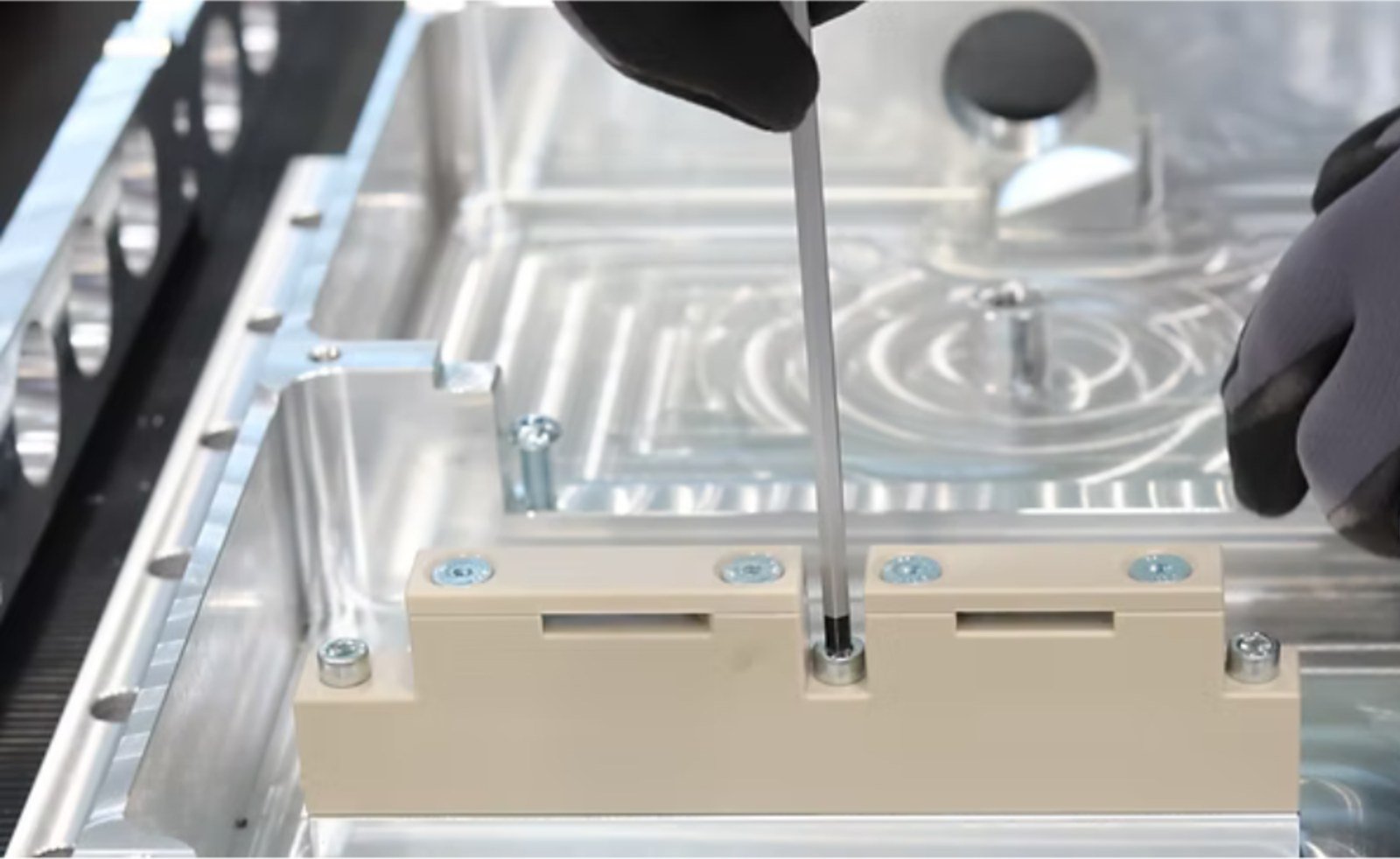
Fixture type 02 / 07
Assembly jigs and complete assembly workstations for repeatable joining and positioning processes — ergonomic, mistake-proof and ready for series production.
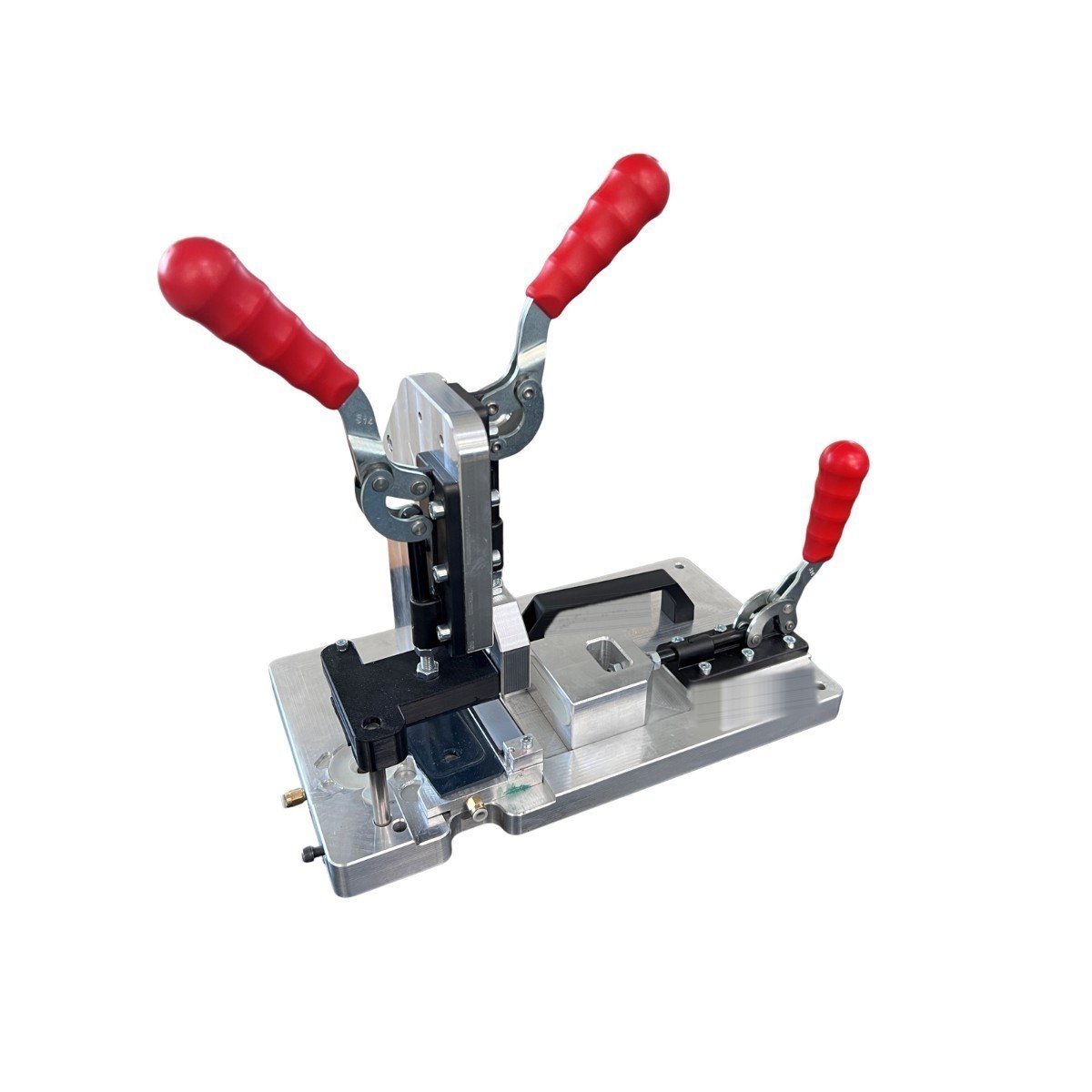
· In use
A good assembly jig makes the process faster and quality independent of how the day is going. We develop assembly jigs that position parts unambiguously, rule out operating errors by design and fit into your cycle time — from a single joining step to a complete assembly workstation.
As with all our fixture types, we choose the manufacturing process to suit the application — CNC machining, 3D printing and post-processing, individually or combined as a hybrid. You receive the complete fixture from a single source, from design to commissioning.
· Scope of services
· Application
Assembly jigs pay off wherever parts are repeatedly joined, bolted, pressed or clipped in the same position: for assemblies with several variants, for tight positional tolerances and for work steps that currently depend on the experience of individual employees. Typical designs are assembly jigs for structural parts, insertion and joining fixtures, drilling jigs and complete assembly workstations with quick-release clamps and stops.
We take care of concept, design, manufacturing and assembly of the jig. We mill base bodies on 3- and 5-axis CNC machines; nests close to the part are often 3D printed — this saves weight and protects surfaces. For changing parts we plan flexible fixture systems with interchangeable nests.
· Frequently asked questions
Both terms mean the same thing: a device that positions and holds parts unambiguously for joining. “Assembly jig” is the term commonly used in aerospace and in international projects.
Yes, if the variants are related in design. We solve this with interchangeable nests or repositionable stops. Whether it pays off is something we check against your range of parts.
By design: asymmetrical nests, coding pins and stops ensure that a part only fits into the jig in the correct position.
CAD data of the parts (STEP), a brief description of the joining sequence, plus quantity and cycle time. A requirements specification helps but is not a prerequisite — a sketch or a photo is enough for the first conversation.
· More fixture types
Tell us about your part, process and quantity — we will get back to you within 24 hours.